Welding Quality Assurance: Compliance Solutions for UK Businesses
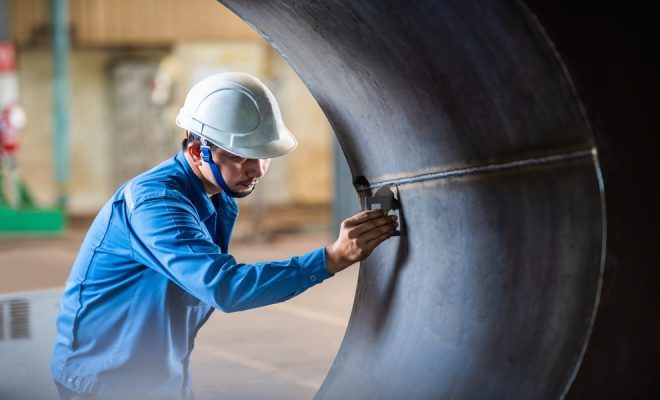
In steel fabrication, joining metal is a special process. Its integrity cannot be fully checked without destroying the product. This demands specialist management, skilled personnel, and strict procedures from the very beginning.
Control must start at the design and planning stage. This approach optimises costs and ensures the final product’s strength and reliability. It is a fundamental practice for any responsible fabricator.
Today’s commercial landscape is increasingly strict. Client organisations, insurers, and specification writers often mandate that fabricators comply with specific international standards. Common requirements include ISO3834 and the EN1090 framework for structural steel.
For UK companies, navigating these demands is essential. Sectors like oil and gas, offshore energy, major infrastructure, and aerospace rely on robust systems. NWQS Ltd specialises in delivering comprehensive solutions tailored to these needs.
Effective management directly influences operational safety, production efficiency, and long-term structural performance. It is a critical investment that prevents costly failures and enhances a firm’s reputation in a competitive market.
Key Takeaways
- Metal joining is classified as a “special process” requiring expert oversight from project inception.
- Proper control systems must be established early to optimise financial outlay and guarantee product integrity.
- Clients, insurers, and regulations increasingly require adherence to standards like ISO3834 and EN1090.
- Specialist providers like NWQS Ltd offer tailored support to help UK businesses meet these rigorous frameworks.
- Implementing a robust system positively impacts safety, operational efficiency, and project costs.
- For UK industrial sectors, such an approach is a commercial necessity to maintain competitiveness and ensure compliance.
Understanding the Importance of Welding Quality and Compliance
The integrity of fabricated metal structures hinges on systematic control throughout manufacturing. Conforming to recognised technical standards is not optional for responsible fabricators.
Client specifications and regulatory frameworks demand documented proof of capability. This evidence builds trust and mitigates risk for all parties involved.
Industry Standards and Regulatory Frameworks
ISO3834 provides the primary framework for managing metal joining operations. It consists of six parts, with three certification levels available.
Businesses can select the appropriate level based on their operational complexity. This scalable approach suits different company sizes and product ranges.
| ISO3834 Part | Certification Level | Typical Application |
|---|---|---|
| Part 2 | Comprehensive | Complex fabrication with critical integrity requirements |
| Part 3 | Specific | Defined product ranges with standardised procedures |
| Part 4 | Basic | Simpler operations needing fundamental control |
Accreditation bodies like UKAS verify that procedures meet international benchmarks. Many specifications also mandate alignment with EN1090 for structural steelwork.
Larger fabricators often address these requirements within their ISO9001 systems. Smaller companies may need to develop dedicated documentation.
Impact on Safety, Efficiency, and Production
Defective joins create serious safety hazards and can lead to structural failures. Robust systems prevent such issues and protect against liability.
Proactive control identifies potential defects early in the process. This minimises rework costs and avoids costly delays in production schedules.
Consistent output quality reduces material wastage and improves workflow. It also enhances a firm’s competitiveness when bidding for contracts.
Many tender specifications now require documented certification. Meeting these requirements has become a commercial necessity for UK fabricators.
Welding Quality Assurance and Compliance Services
The path to compliant fabrication is built on documented procedures, qualified welders, and precise inspection. Specialist firms like NWQS offer a complete portfolio of technical services to UK businesses.
Comprehensive Service Overview
Foundational elements include Welding Procedure Qualification Records (WPQR). These documents validate that a procedure is robust and meets all relevant standards and client specifications.
Welder Performance Qualification (WPQ) is another critical service. It involves practical testing to certify individual welders for specific tasks, ensuring personnel competency.
Inspection, Testing and Certification Processes
Non-Destructive Testing (NDT) methods are integrated to find flaws without damage. Techniques like radiographic testing provide crucial certification data.
Inspection Test Plans (ITPs) establish critical control points. They schedule inspections to verify weld quality throughout production.
For pipeline projects, specialised inspections and expert consultancy deliver complete coverage. This supports UK utilities and major infrastructure.
Implementing a Robust Quality Management System
A formal Welding Quality Management System (WQMS) provides the essential framework for controlling fabrication from tender to delivery. This system details how management oversees every stage.
The required level of detail depends on the company size, materials used, and product range. A tailored approach is vital.
Integration with ISO and EN Standards
For smaller fabricators with a limited range, compliance with ISO3834 is often sufficient. A stand-alone WQMS focuses purely on welding control.
Larger companies with existing ISO9000 certification can integrate these requirements. The WQMS becomes an annex to avoid duplication.
It is crucial to distinguish between compliance and certification. Compliance means operating in accordance with the standard.
Certification requires an independent audit by a UKAS-accredited body. Client and sector requirements dictate which level is needed.
Benefits of a Dedicated WQMS and Management Procedures
Specialist providers like NWQS Ltd develop bespoke WQMS documentation. They guide companies through the entire process.
A robust system aligns strategic purpose with customer needs. This ensures high standards and accountability.
The competitive edge is clear. Firms gain client confidence and improved tender success.
Operating without a formal system carries significant risk. It can lead to failed audits and reputational damage.
Advanced Inspections and Continuous Process Improvement
Sophisticated inspection methodologies provide ongoing verification that welded joints perform as intended throughout their service life. This proactive approach moves beyond initial qualification.
Non-Destructive Testing and Pipeline Inspection Methods
Various non-destructive testing (NDT) techniques examine components without causing damage. Ultrasonic testing finds subsurface flaws. Radiographic methods reveal internal discontinuities.
Magnetic particle inspection detects surface cracks in ferromagnetic materials. Liquid penetrant assessment works on non-magnetic metals.
For pipeline assets, specialised services assess condition and strength. They ensure adherence to sector safety standards. Data informs future maintenance plans.
| NDT Method | Detection Principle | Primary Use |
|---|---|---|
| Ultrasonic Testing | High-frequency sound waves | Subsurface cracks and voids |
| Radiographic Testing | X-ray or gamma radiation | Internal porosity and inclusions |
| Magnetic Particle | Magnetic flux leakage | Surface and near-surface cracks |
| Liquid Penetrant | Capillary action | Surface-breaking defects |
Regular Audits and Process Optimisation
Systematic audits verify contractor performance and procedure adherence. They identify opportunities for enhancement in the welding process.
Providers likeNWQS support continuous improvement. They analyse performance data to reduce defects and prevent costly issues.
This optimisation maintains consistent product output and customer satisfaction. It is a key part of sustained quality.
Conclusion
Investing in robust control systems transforms regulatory obligations into tangible commercial advantages. A proactive approach to welding integrity prevents failures, optimises production speed, and ensures compliance with essential safety requirements. This directly safeguards project timelines and profitability.
For UK fabricators, demonstrable quality management is a powerful differentiator. It builds customer confidence and helps secure contracts. A full spectrum of support services, from system development to certification, is available for businesses at every stage.
Forward-thinking companies should evaluate their current procedures. Partnering with expert consultancies delivers tailored solutions that ensure reliable outcomes and efficient project completion.