Why Risk Assessment Matters Before Major Decisions
Every significant decision carries uncertainty, and the quality of that decision depends heavily on how well the associated risks are understood before a commitment is made. Risk assessment is not a tool reserved for governments or large corporations – it is a structured thinking process that improves outcomes for individuals, businesses, and organizations of any size. Taking the time to identify, evaluate, and plan for potential risks before acting transforms uncertainty from a threat into a manageable factor in the decision-making process.
Identifying Risks Before They Become Problems
The most valuable function of risk assessment is making the invisible visible. Many risks are not immediately obvious – they emerge from assumptions that turn out to be wrong, from dependencies that are not recognized until they fail, or from external conditions that change unexpectedly. A structured risk identification process asks systematic questions about what could go wrong, who might be affected, and what circumstances could prevent a plan from succeeding as intended.
Using Formal Assessment Frameworks
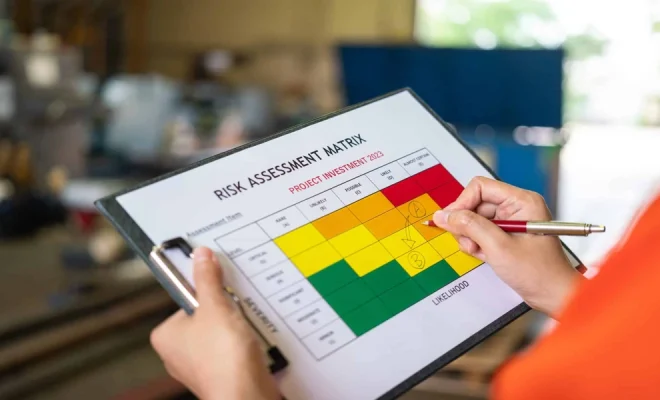
Structured risk assessment frameworks provide consistent methodologies for evaluating and prioritizing risks across different types of decisions. A national risk assessment applies this thinking at a policy level – systematically evaluating the probability and potential impact of a broad range of threats to inform preparedness planning and resource allocation. At the organizational level, risk registers, probability-impact matrices, and scenario planning tools apply the same logic to business decisions.
Quantifying the Likelihood and Impact of Risks
Not all risks deserve equal attention, and risk assessment provides the tools needed to prioritize them appropriately. Evaluating each identified risk by its likelihood of occurrence and the severity of its potential impact creates a ranking that guides where to focus risk management resources. High-probability, high-impact risks require mitigation strategies developed before a decision is finalized. Low-probability, low-impact risks may warrant monitoring but do not justify significant pre-emptive investment. This prioritization prevents both over-reaction to remote possibilities and under-response to genuine threats.
Incorporating Risk Assessment Into Decision-Making Culture
Organizations and individuals who make risk assessment a consistent part of decision-making rather than a one-time exercise develop better judgment over time. Reviewing past risk assessments to compare predicted risks with actual outcomes builds calibration – the ability to estimate probabilities more accurately based on experience. Leaders who model systematic risk thinking create cultures where teams surface concerns early rather than suppressing them under pressure to appear confident. This culture of transparent risk discussion improves collective decision quality across every level of the organization.
Acting Decisively With Incomplete Information
Risk assessment does not eliminate uncertainty – it reduces it and structures the remaining uncertainty in manageable terms. Decisions still must be made with incomplete information, and risk assessment equips decision-makers to act with greater confidence by identifying the most consequential unknowns and planning for them explicitly. Contingency plans developed before a decision is made reduce the reactive scrambling that occurs when unexpected risks materialize. The goal is not perfect foresight but better preparation for the range of outcomes that a well-analyzed decision might produce.
Conclusion
Risk assessment before major decisions is an investment in better outcomes, not an obstacle to action. Understanding what could go wrong, prioritizing the most significant risks, and planning responses in advance gives decision-makers the insight needed to proceed with confidence and resilience when circumstances inevitably differ from the original plan.