How to Calculate Pallet Racking Beam and Upright Load Limits
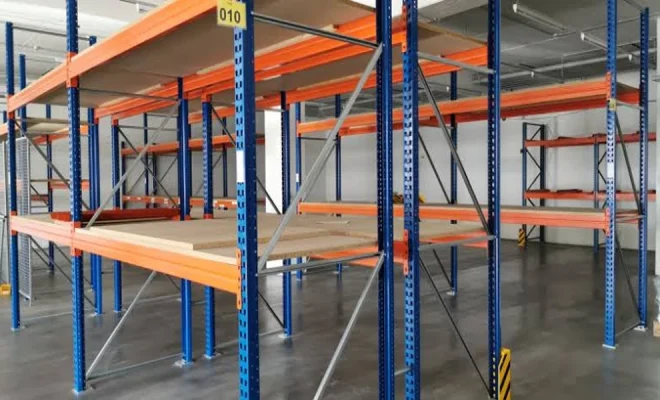
Warehouse teams generally know the beam capacity because it is printed on a plate at the end of the run. Far fewer know that the figure is conditional, and that moving a beam by a couple of hundred millimetres can invalidate it. Understanding how to calculate pallet racking beam and upright load limits matters because almost every rack collapse traces back to a load that someone believed was within rating.
Two Different Limits Doing Different Jobs
Beam capacity is the load a single pair of beams can carry at one level. Upright or frame capacity is the total load the vertical frame can carry across every level above the floor. They are calculated separately and both must be satisfied. A common error is to multiply the beam rating by the number of levels and assume that figure is the bay capacity. It is not, and on tall installations the upright is usually the binding constraint.
What the Beam Rating Assumes
A beam capacity is stated for a uniformly distributed load, which in practice means two pallets of similar weight sitting near the ends of the span rather than one concentrated mass in the middle. A single heavy item placed centrally produces a much higher bending moment than the same weight spread across two pallet positions, and can exceed the rating while being well under the stated tonnage. If your loads are not two standard pallets per level, tell the supplier so the rating reflects reality.
Beam Pitch Governs Upright Capacity
This is the relationship most people are unaware of. An upright is a slender column, and its capacity depends on the unbraced length between beam connections. Shorter distances between beam levels mean a stiffer column and a higher rating; longer distances mean a lower one. Raising a beam to fit a taller pallet increases that unbraced length and reduces what the whole frame can carry, sometimes by a surprising margin. This is why beam levels must never be repositioned without checking the load table.
Reading a Load Notice Plate
The plate should state the maximum load per beam level, the maximum load per bay, the beam configuration those figures assume, and the design standard used. If the plate gives a bay figure without stating the beam pitch it applies to, the information is incomplete. Where a run has been modified since installation, the plate may no longer describe the structure in front of you, and that discrepancy is worth resolving before anything else. Suppliers who take pallet racking load capacity seriously provide these plates as standard rather than on request.
Working Out What You Actually Store
Weigh a full pallet rather than estimating from a product specification, and weigh the heaviest one rather than a typical one. Include the pallet itself, which adds a meaningful amount for a hardwood pallet, and any packaging, shrink wrap or slip sheets. If loads vary seasonally, use the peak. Then compare against the beam rating per level and sum the levels to compare against the bay rating. Doing this once with real figures is more useful than any amount of assumption.
Concentrated and Irregular Loads
Machinery, coils, drums and stone slabs load beams very differently from a uniform pallet. Where the footprint is small or the weight sits over a narrow band, the load is concentrated and the beam rating for a uniformly distributed load no longer applies. Decking helps distribute it, and steel panel decking distributes better than mesh. For genuinely concentrated loads the correct step is to ask the supplier for a rating specific to that load case rather than working from the general plate.
A Worked Example
Take a bay with four beam levels rated at two tonnes per level and a frame rated at seven tonnes. Four levels at full beam capacity would be eight tonnes, which exceeds the frame rating, so the true limit is seven tonnes across the bay however it is distributed. Load three levels at two tonnes and the fourth at one, and you are compliant. Load all four at two tonnes because the beam plate says two, and you are a tonne over on the frame with nothing visibly wrong. This is the arithmetic that gets missed, and it takes a minute to check.
Safety Factors Are Not Spare Capacity
Design standards include factors accounting for material variation, imperfection and the uncertainties of real use. Those factors are already consumed by the assumptions behind the rating, not held in reserve for occasional overloading. Treating them as headroom is how a structure that never failed under a hundred slightly overloaded pallets fails under the hundred and first, when a dented upright and an off-centre load coincide.
Damage Reduces Capacity Immediately
A dented or bowed upright has lost capacity, and the loss is disproportionate to how minor the damage looks, because a column’s strength depends on its straightness. The same applies to a missing safety lock, a loose anchor, a frame knocked out of plumb, or a beam bent by an impact from beneath. Damaged components should be offloaded and assessed rather than monitored, and repaired using engineered repair systems or replaced outright.
Building the Habit
Post the load limits where the forklift operators can read them, brief the team on why beam levels are fixed, and require any proposed change to be checked against the load table first. Record the pallet weights you actually handle and review them when product lines change. Applied consistently, how to calculate pallet racking beam and upright load limits becomes an ordinary operational check rather than a calculation nobody has ever done.