Personal Storage in the Hybrid Workplace: Why Lockers Are Replacing Assigned Desks
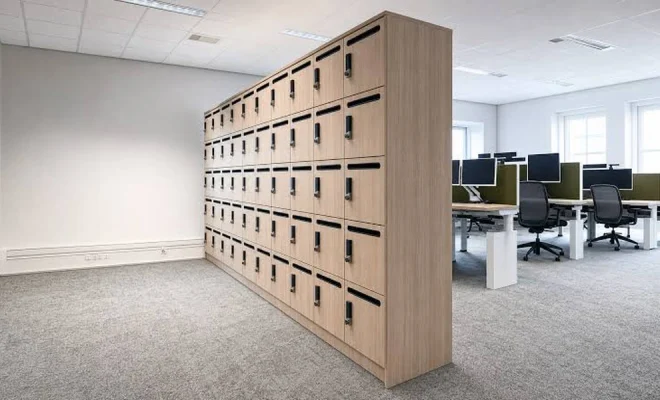
Hybrid work has reshaped how offices use space, and personal storage is one of the clearest examples. Many organizations now use shared desks instead of assigned workstations, which means employees need somewhere else to keep their belongings during the day. Lockers are filling that role in offices, labs, and corporate campuses across the country.
Why are assigned desks disappearing?
Assigned desks are disappearing because many of them sit empty on any given day. A federal review found that 17 of 24 agency headquarters buildings used, on average, 25 percent or less of their capacity during the period studied (Government Accountability Office). Private employers report similar patterns, which pushes them toward shared desks and fewer square feet per person.
What problem does desk sharing create?
Desk sharing creates a storage problem. Employees who once kept bags, laptops, and personal items at their own desk now arrive each day without a fixed place to put them. Without lockers, belongings end up under tables, on chairs, or carried from room to room.
How do workplace lockers adapt to hybrid schedules?
Workplace lockers adapt to hybrid schedules through flexible locking. Lockers are designed to accept built-in key locks, combination locks, padlocks, electronic locks, and coin-operated locks, so organizations can assign lockers permanently or share them day by day (ASI Storage Solutions).
Which locking approach fits which workplace?
Each locking approach fits a different workplace model:
- Built-in key locks suit permanently assigned lockers
- Combination locks reduce key management for stable teams
- Electronic locks support day-use assignment for hybrid staff
- Padlock-ready doors let employees bring their own locks
Why do electronic locks suit hybrid offices?
Electronic locks suit hybrid offices because they let facility teams reassign lockers without collecting keys or changing combinations. Employees can claim a locker for the day and release it when they leave, which matches how shared desks are used.
How many workers are part of this shift?
The shift affects a large share of the workforce. Roughly one in five employed people in the United States teleworked at least some hours in recent federal labor surveys (Bureau of Labor Statistics). Those workers move between home and office and need secure storage on the days they come in.
Where should lockers be placed?
Lockers work best near entries, team neighborhoods, and amenity areas such as kitchens and lounges. Placement close to shared desks lets employees drop off belongings quickly and move straight into collaborative work.
Do some workplaces have specific storage obligations?
Some workplaces have specific storage obligations. Where employees must wear protective clothing because of the hazards of their work, employers must provide change rooms with separate storage for street clothes (Occupational Safety and Health Administration). Labs, manufacturing areas, and food service operations often use lockers to meet that need alongside office staff.
How do lockers support employee experience?
Lockers support employee experience by making office days easier. A secure place for a laptop bag, gym clothes, or a coat lets employees move freely between meetings and collaboration spaces, which is exactly why many of them come into the office.
How many lockers does a hybrid office need?
The number of lockers a hybrid office needs depends on peak attendance rather than total headcount. Organizations typically size locker banks to the busiest office day, then add a margin for visitors and new hires. Tracking badge data and desk reservations for several months gives planners a reliable estimate before they order.
Which locker sizes work best for office staff?
Office staff usually need space for a laptop bag, a coat, and small personal items. Two-tier and multi-tier lockers fit these needs efficiently and allow more lockers per wall than full-height units, which helps in buildings where floor space is being consolidated.
What should workplace planners take away?
Personal storage is now part of hybrid workplace design. Planners who provide lockers with flexible lock options, placed where employees need them, help shared desks work smoothly and make office days more productive.